Beschreibung
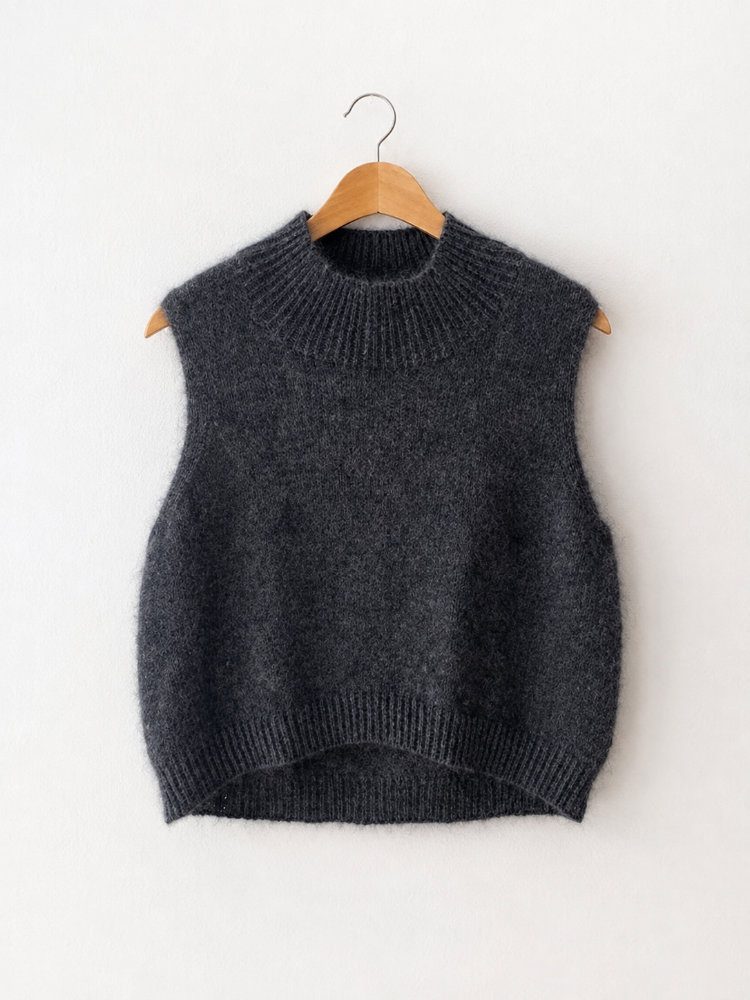
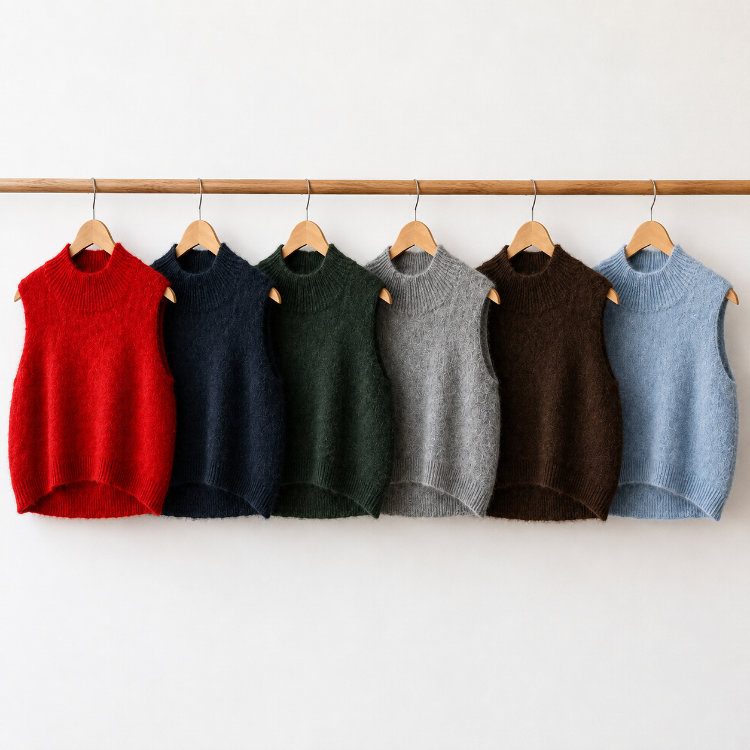
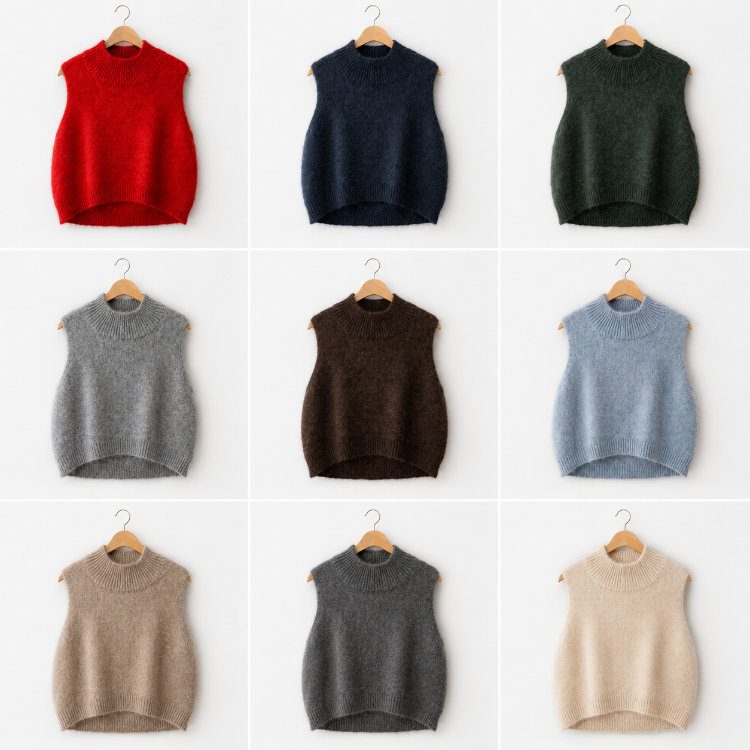
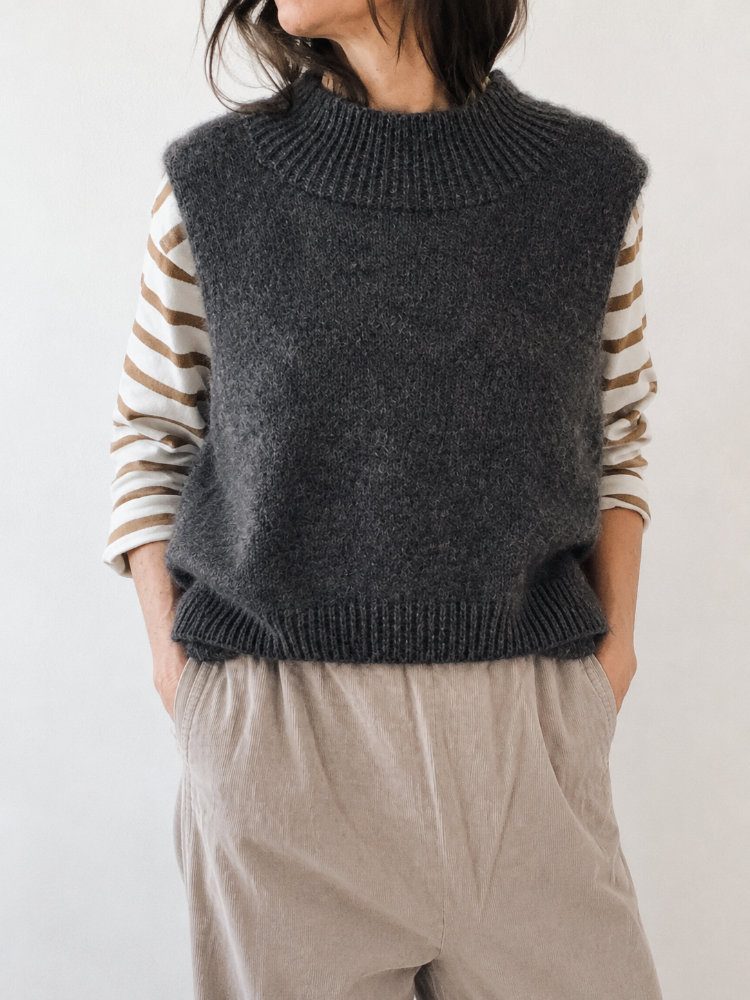
Villma Slipover – clean-cut slipover with mock neck and rounded hem
The Villma Slipover is a modern, versatile slipover with a calm silhouette and distinctive details.
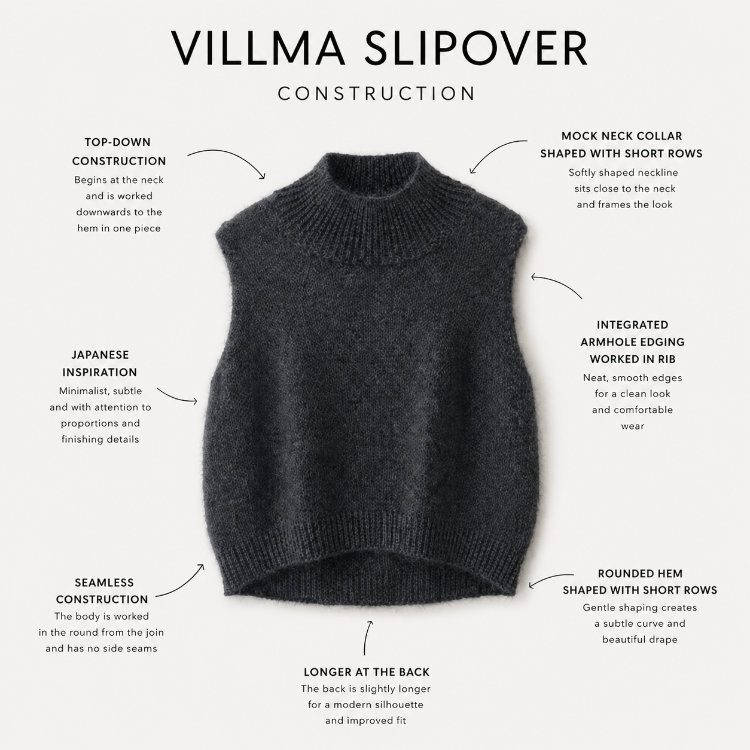
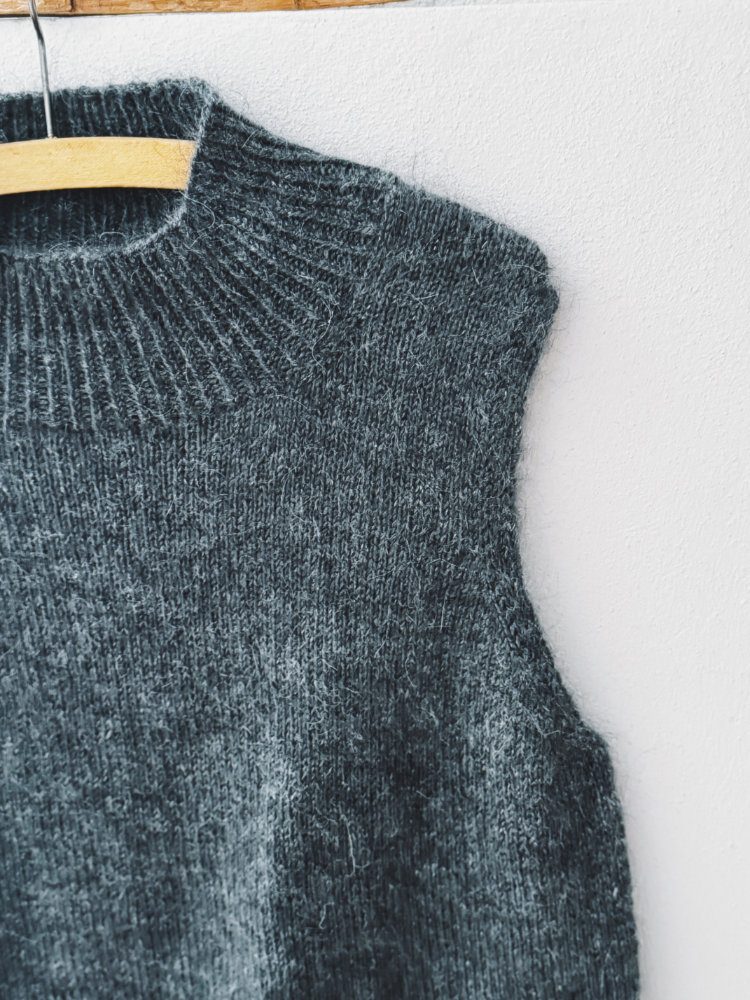
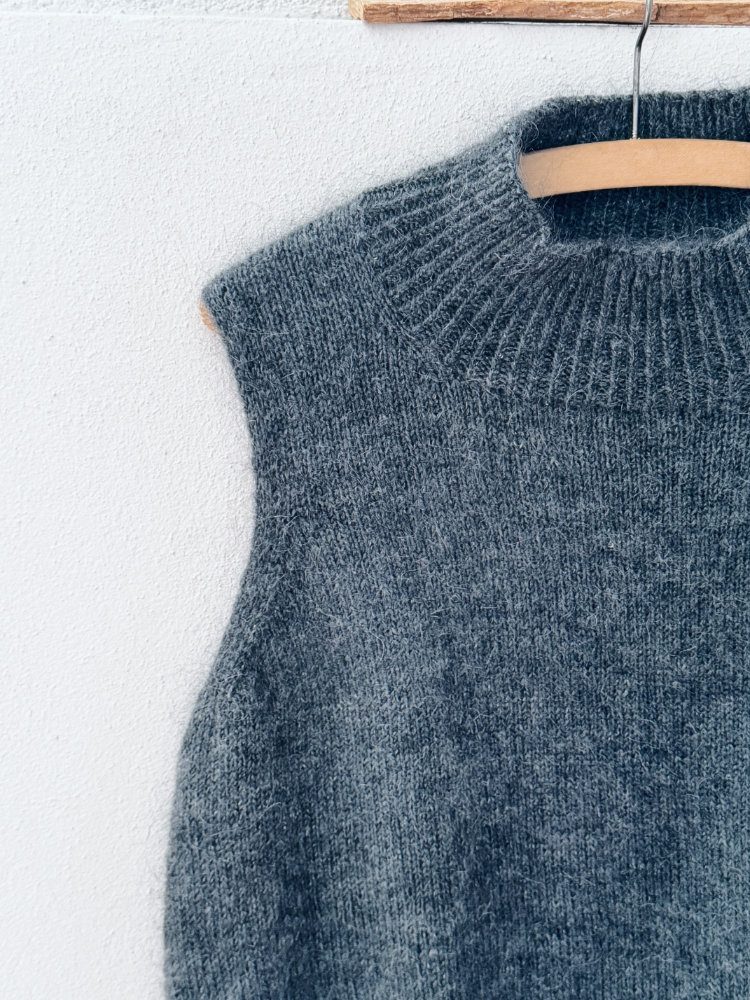
With its clean lines and reduced shape, it is inspired by the aesthetics of Japanese design. The narrow mock neck, directly worked armhole edgings and softly rounded hem give the design its characteristic look.
The Villma Slipover is worked seamlessly from the top down. The Back and Front are first worked separately in rows, with the shoulders shaped using short rows. The pieces are then joined for the body and worked together in the round.
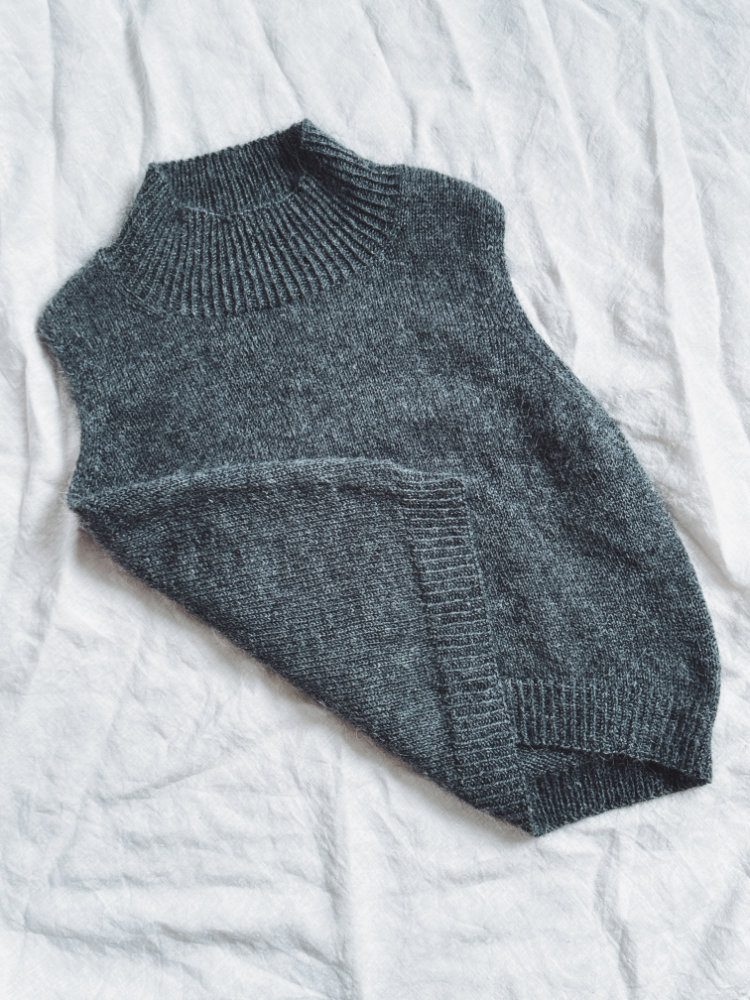
Additional short rows shape the rounded hem and make the Back slightly longer than the Front. Thanks to the top-down construction, the body length can easily be adjusted while knitting.
A timeless layering piece for autumn and winter – clean, versatile and easy to combine.
The pattern is suitable for knitters with some experience working flat and in the round, as well as with short rows and increases. All steps are explained in detail.
Construction:
– Worked seamlessly from the top down
– Back and Front sections are first worked separately in rows
– Shoulders are shaped using short rows
– Front sections are joined
– Front and Back are then joined for the body
– Body is worked in the round
– Rounded hem shaped with short rows
– Back is longer than the Front
– Mock neck is worked at the end
– Armhole edgings are worked directly into the construction
– All lengths can be adjusted individually
Difficulty:
●●●○○ – for knitters with some experience working flat and in the round, as well as with short rows and increases
Sizes:
1-8, :(1/2/3/4) (5/6/7/8
A Chest width
(36/38/40.5/42) (44/45.5/49/51) cm = (14.2/15/15.9/16.5) (17.3/17.9/19.3/20.1) in
B Body circumference
(98.5/103.5/110.5/119) (124.5/135/143.5/150.5) cm
Gauge (washed & blocked):
10 x 10 cm = 23 sts x 32 rows/rnds in stockinette stitch on 3.5 mm needles
Recommended needles:
– Circular needles, e.g. 3 mm, 3.5 mm
– Cable lengths approx. 40–100 cm, depending on size and preferred knitting technique
– Alternatively: Magic Loop or double-pointed needles for smaller circumferences
Techniques used:
– Working flat and in the round
– German Short Rows / double stitches
– M1L and M1R increases
– Picking up and placing stitches on hold
– Slip stitch panels at the edges
– Top-down construction
– No seaming required
Additional materials:
– Stitch markers
– 2 stitch holders or pieces of scrap yarn
– Measuring tape
– Scissors
– Tapestry needle
Returns and exchanges are excluded.
Details
Suggested yarns & yarn requirements:
DROPS Baby Merino
100% wool
Length: approx. 175 m / 50 g
→ (200/200/250/250) (300/300/350/350) g
held together with
DROPS Kid-Silk
75% mohair, 25% silk
Length: approx. 210 m / 25 g
→ (75/100/100/125) (125/125/150/150) g
Sandnes Sunday
100% merino wool
Length: approx. 235 m / 50 g
→ (150/150/200/200) (225/225/275/275) g
held together with
Sandnes Tynn Silk Mohair
57% mohair, 28% silk, 15% wool
Length: approx. 212 m / 25 g
→ (100/100/125/125) (125/125/150/150) g
Knitting for Olive Merino
100% merino wool
Length: approx. 250 m / 50 g
→ (150/150/175/175) (225/225/250/250) g
held together with
Knitting for Olive Soft Silk Mohair
70% mohair, 30% silk
Length: approx. 225 m / 25 g
→ (100/100/100/100) (125/125/150/150) g
Sandnes Double Sunday
100% merino wool
Length: approx. 108 m / 50 g
→ (350/350/450/450) (500/500/600/600) g
If you use a different yarn, adjust the required quantity according to its yardage. Please also note that the yarn requirements may change if you alter the body length.
FAQs
Who is the Villma Slipover suitable for?
The difficulty level is ●●●○○. The Villma Slipover is suitable for knitters with some experience working flat and in the round, as well as with short rows and increases. All steps are explained in detail.
How is the Villma Slipover constructed?
The Villma Slipover is worked seamlessly from the top down.
The Back is worked first, followed by the two Front sections. The shoulders are shaped using short rows.
After the Front sections have been joined, the Front and Back are joined for the body and worked in the round. Additional short rows shape the softly rounded hem and make the Back slightly longer than the Front.
The mock neck is picked up from the neckline at the end and worked in the round.
Which size should I knit?
Use the finished body circumference as your guide:
(103/108/119/128) (135/141/153.5/157) cm
Compare these measurements with a well-fitting slipover from your wardrobe and take your preferred amount of positive ease into account.
In the photos, size 2 is worn with a bust circumference of 86 cm and a height of 1.58 m.
Can I adjust the length of the Villma Slipover?
Yes. Because the Villma Slipover is worked from the top down, the body length can easily be adjusted while knitting.
Please keep in mind that changing the length will also change the yarn requirements.
Which yarns are suitable for the Villma Slipover?
The original version is worked with DROPS Baby Merino held together with DROPS Kid-Silk.
Other suggested yarn combinations include:
– Sandnes Sunday held together with Sandnes Tynn Silk Mohair
– Knitting for Olive Merino held together with Soft Silk Mohair
– Sandnes Double Sunday held single
The most important factor is achieving the stated gauge of 23 sts x 32 rows/rnds = 10 x 10 cm.
Can I knit the Villma Slipover without mohair?
Yes. Sandnes Double Sunday can be used as a single-strand, mohair-free alternative.
The fabric will look cleaner and less fluffy than a version knitted with a mohair strand. The construction and fit remain the same as long as you achieve the stated gauge.
What is special about the construction?
The Villma Slipover combines a clean silhouette inspired by Japanese aesthetics with several subtle details:
– seamless top-down construction
– shoulders shaped with short rows
– narrow mock neck
– directly worked armhole edgings
– ribbing with twisted stitches
– rounded hem
– longer Back
Can I use a different yarn?
Yes. You can use another yarn or yarn combination as long as you achieve the gauge of 23 sts x 32 rows/rnds = 10 x 10 cm.
Adjust the yarn requirements according to the yardage of your chosen yarn and always make a washed and blocked gauge swatch before starting.